August 24, 2026
When facing complex ultrasonic vibration systems in laboratories, engineers often struggle to identify deeply embedded vibration characteristics. While laser vibrometers offer precision, they frequently fail when surfaces have poor reflectivity, liquid coatings, or confined spaces. On industrial production lines, shutdowns for testing represent prohibitively expensive luxuries. The solution? A portable "probe" that functions like a stethoscope—providing instant vibration diagnostics through simple contact.
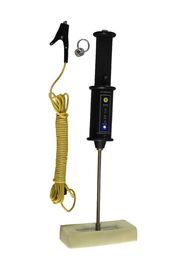
Ultrasonic Vibration Systems (UVS) contain complex structures with multiple vibration modes and high-frequency harmonics. Comprehensive performance analysis typically requires measuring dozens—sometimes hundreds—of characteristic points. Traditional methods prove time-consuming and often yield inaccurate data with complex geometries. The handheld piezoelectric sensor (pencil-type) emerges as an ideal solution, capturing amplitude and frequency data through brief contact (typically one second), making it perfect for preliminary screening and fault detection.
The sensor's design hinges on balance. To avoid altering a system's natural vibrations, the device must be exceptionally lightweight. The prototype achieves this through:
Rigorous testing confirmed the sensor's reliability:
While excelling below 100kHz, signal stability diminishes at higher frequencies due to mechanical contact limitations. This tool isn't intended to replace high-precision laser measurements but serves as a "scout"—helping engineers rapidly identify critical areas among numerous test points, thereby optimizing time-intensive detailed measurements. This cost-effective solution offers significant value for industrial quality control and scientific research.